








Coptic Orthodox
A Journey Through The Great Lent
By: GEORGE YOUSSEF
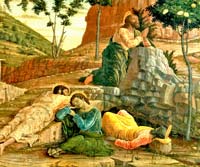 The Great Lent is undoubtedly the holiest fast observed by the Coptic Orthodox Church. During the Great Lent, we fast for a total of fifty five days; seven days from the preparation week, forty days to fast as Our Lord fasted in the wilderness for forty days and forty nights (Matthew 4:2), one day for Lazarus Saturday, and the seven last days for Holy Week [1]. It is important to constantly
A Man Born Blind Receives Sight | Sixth Sunday of Lent:
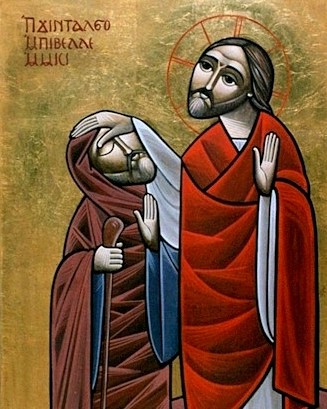
On the last Sunday before Palm Sunday, we talk about the man who was born blind. This story is quite important and is found in John 9. This story teaches us not to judge people because of their appearances and disabilities. The blind man was not paid attention to, as people thought he was blind because one of his parents committed a sin. This is unfair as he was treated badly and was not helped. He was healed when Jesus spat on the ground, and with this he told the blind man to put the mud on his eyes and wash it in the pool of Siloam. This must mean that the blind man had faith in Jesus, as this pool was far away, and the man had never seen Jesus before. The fact that the man saw again emphasizes the point that Jesus is the `light of the world`. The blind man had great faith in Jesus, as he had never seen him, and therefore he could have easily thought he was being tricked. We should
First Sunday
Matthew 6:19-33
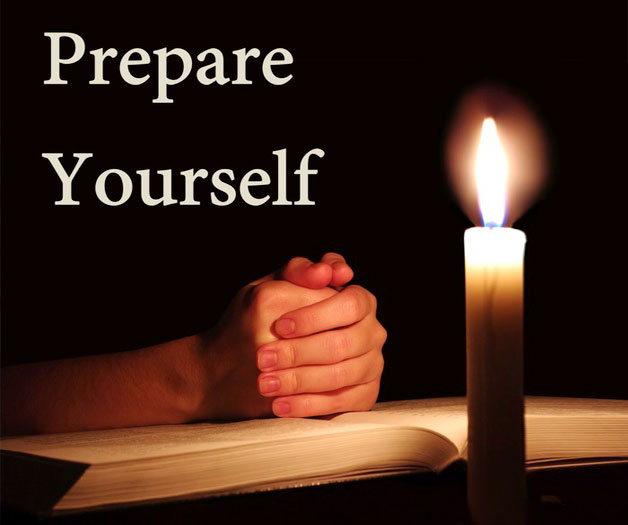 Since birth, we were all taught to “seek first the Kingdom of God.” But in seeking the Kingdom of God we must challenge ourselves and give up our own desires. We often think that by striving for holiness, we will no longer be happy or by striving for righteousness, everything else in our lives will falter. Sadly, we put so much faith in our own abilities and forget the power of God. We forget how much He has given us, we forget how much He suffered for us, we forget that even our trusted abilities were given to us by Him, and the most unfortunate of all, we forget that ALL things are possible to Him.
When we put so much focus on our academic, career, social, or physical goals yet forget our spiritual goals, our hearts and minds begin to accumulate many impurities because of their lack of nourishment. However, we must be careful what we place into our hearts and where we place our hearts, “For where [our] treasure is, there [our] heart will be also.”(Matthew 6: 21). If our focus is on the Kingdom of God, only things leading to the Kingdom of God will be in our hearts and therefore leaving our lips; because, let us not forget that “out of the treasure of the heart, the mouth speaks.” (Matthew 12:34).
During Preparation week of Great Lent, we should set our eyes on heaven. We must prepare ourselves to place God first in our hearts and lives for He put us first before the creation of the world and set everything under our feet. He promises never to leave us in need of anything as we are more of value to Him than the birds of the air, which He also provides for, according to Matthew 6: 26-27. He promised to love us forever and fulfilled His promise by sending His Son to purchase us by His blood. He promised to always fill us; however, we have to open our hearts and allow Him entrance. So let us all open our hearts before God and allow Him to lead us to Him in purity and righteousness as King David in the Psalms said, “Search me, O God, and know my heart; Try me, and know my anxieties; and see if there is any wicked way in me, and lead me in the way everlasting.” (Psalm 139: 23-24)
Author: Marina Abdelsayed
 A lady came to me complaining from her son who entered the day care center. "For the last few days," she told me, "I have been patiently scolding him for doing something wrong, saying, “Don't do that.” But he kept answering me, “No, I will do it.”
"I would tell him gently, 'Honey, that's wrong.'
"But he insisted, "I will do this. I will do it."
I was surprised to hear this because I know this kid to be a
Author: H. H. Pope Shenouda III.
 INTRODUCTION
Many write for adults and few are those who write for children. Also, many occupy themselves talking with adults, but rare are those who love to talk to children. So, sometimes children feel they are not the core of attention and respect of adults, and accordingly they try to draw their attention by many ways, perhaps by outcry or stubbornness or (naughtiness).
In this book, we need to talk about the child, his mentality and how to relate to him and gain his love, and to serve him spiritually, socially and culturally. Because the child is the first cell of the society and the church, if we gain him, we win an entire generation, and if we lose him we lose the future of the generation we live in, and consequent loss of the other generations.
I personally love children and love to joke, play, talk and make friends with them. In childhood I find innocence, truth and openness, as well as the quick response which we lack in adults. This book is not the outcome of a study of books of psychology and education, but the result of personal experiences with the

The Holy Week Schedule:
| No events |
Calendar
| Sat Jun 27 @ 7:45AM - 10:30AM Divine Liturgy Service |
| Sat Jun 27 @ 4:00PM - 05:30PM Evening Prayers, Tasbeha and Asheya |
| Sat Jun 27 @ 5:30PM - 07:00PM Sunday School Service for middle School |
| Sat Jun 27 @ 5:30PM - 07:00PM High School Bible Study & Follow Me (Servants prep class) |
| Sat Jun 27 @ 7:00PM - 09:00PM Midnight Praises |
| Sun Jun 28 @ 5:15AM - 08:15AM Divine Liturgy Service (Big Church) |
| Sun Jun 28 @ 7:30AM - 11:00AM Divine Liturgy Service (Small church) |
| Sun Jun 28 @ 8:15AM - 11:30AM Divine Liturgy Service (Big church) |
| Sun Jun 28 @11:00AM - 12:00PM Sunday School Pre-K - 5th grade |
| Tue Jun 30 @ 7:00AM - 10:00AM Divine Liturgy Service |
 Subscribe to RSS Feed
Announcements
| No events |
Login Form
Online Now
We have 1205 guests and no members online